
Utility Cart Selection Guide: How to Choose the Right Model

A practical utility cart selection guide starts with four questions: how large the cart must be, how much weight it must carry, how it should move, and how many units you need to order. Answering these before you compare models keeps the evaluation objective and avoids buying a cart that is too bulky for the aisle or too light for the load. The 32 in. Utility Cart reviewed here illustrates how each specification connects to a real working condition, from its two-tier shelf layout and 500 lb total weight capacity to its 5 in wheels and mixed fixed and swivel caster set. The sections below walk through the dimensions, loading quantity and order quantity that overseas buyers and importers should confirm before requesting a quotation.
Start With the Duty Cycle and Load Profile
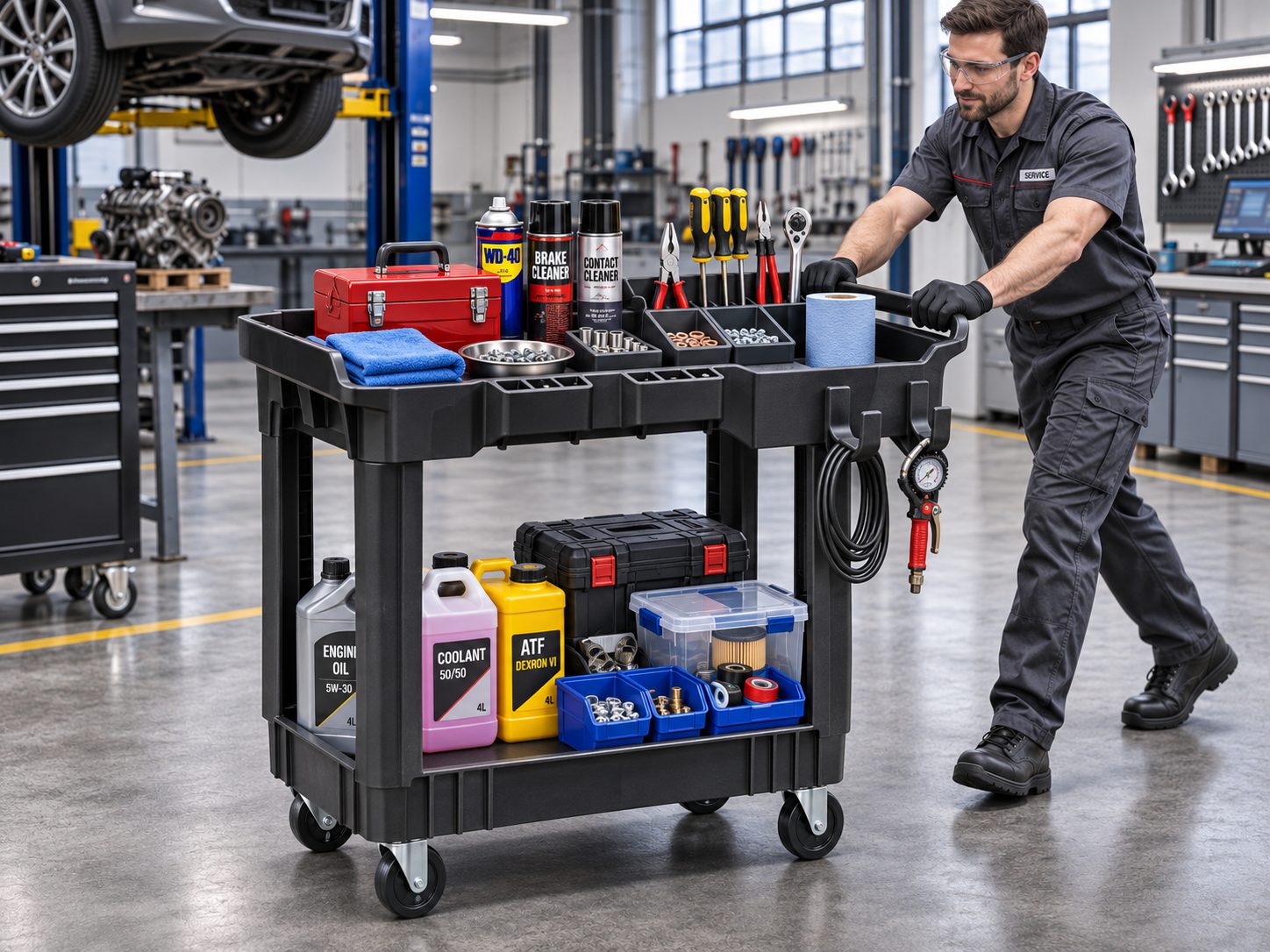
Before comparing any numbers, define what the cart will carry and how often. A cart that moves light hand tools between benches has different requirements from one that transports automotive parts, containers or maintenance equipment through a service area. List the heaviest single item and the total load expected on a typical trip, then add a working margin.
The 32 in. Utility Cart is rated for a total weight capacity of 500 lbs across its two shelves. That figure is the combined limit, so plan how weight will be distributed between the upper and lower shelf rather than assuming each shelf carries the full rating. Buyers serving workshops, garages, warehouses and commercial facilities should match the rating to the heaviest realistic load, not the average one.
Check the Utility Cart Length cm and Footprint
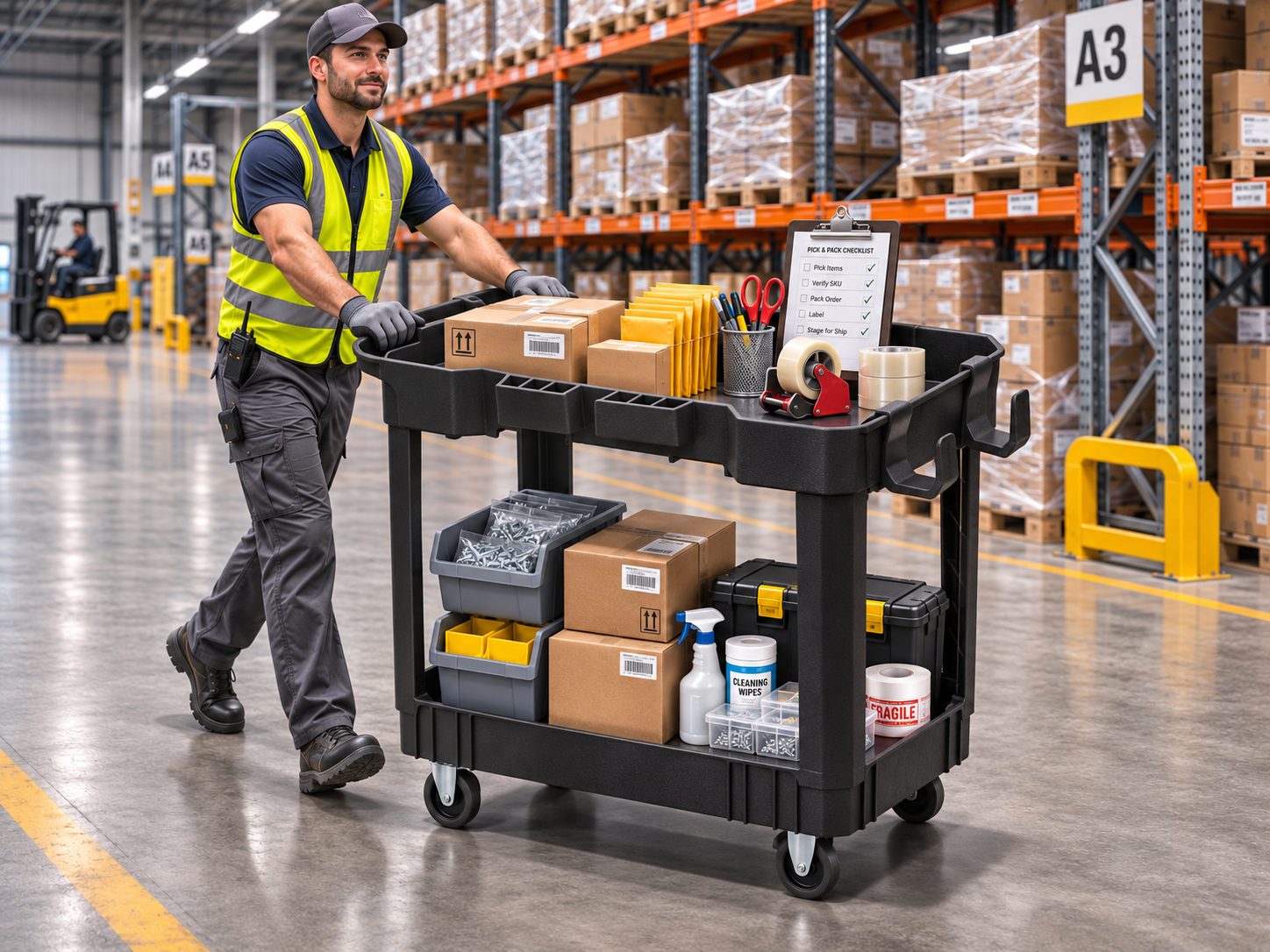
Footprint decides whether a cart works in your customers' aisles, service bays and storage rooms. This model measures 17 in. length by 34 in. width by 32.5 in. height, which converts to roughly 43.18 cm length, 86.36 cm width and 86.36 cm height. Confirm the orientation carefully: the shorter side is the length figure, so the cart presents a wider face when pushed from the handle end.
Measure the narrowest aisle, doorway and lift access at the destination before committing. A compact two-tier cart suits tight work areas, but the actual clearance still has to be checked against the 34 in. width. For importers distributing to mixed customers, a footprint that fits common garage and workshop layouts reduces returns and complaints.
Confirm the Utility Cart Height cm for Working Comfort
Height affects both ergonomics and storage. At 32.5 in. (about 86.36 cm), this cart places the upper shelf at a height that suits many standing workstations, though comfort depends on the user's stature and the task. Lower shelves are better for bulky containers; upper shelves suit frequently used tools and parts.
Height also matters in transit and storage. Check that the assembled cart clears shelving, rack openings and vehicle loading areas, and note the packaging dimensions of 17.9 in. length by 9.25 in. width by 34.68 in. height when planning warehouse space for incoming stock.
Evaluate Casters and Wheels for the Floor Surface
Mobility is where cart designs differ most. This model uses two fixed and two swivel casters with 5 in. wheels, a common configuration that balances straight-line tracking with turning control. Swivel casters allow the cart to pivot in tight spaces; fixed casters keep it stable when pushed over distance.
Ask what floors the cart will roll on. Smooth concrete and sealed workshop floors suit standard casters, while thresholds, expansion joints and debris require more attention to wheel size and caster quality. A 5 in. wheel rolls more easily over small obstacles than a smaller wheel, which matters in busy service areas.
Review Construction, Weight and Handling
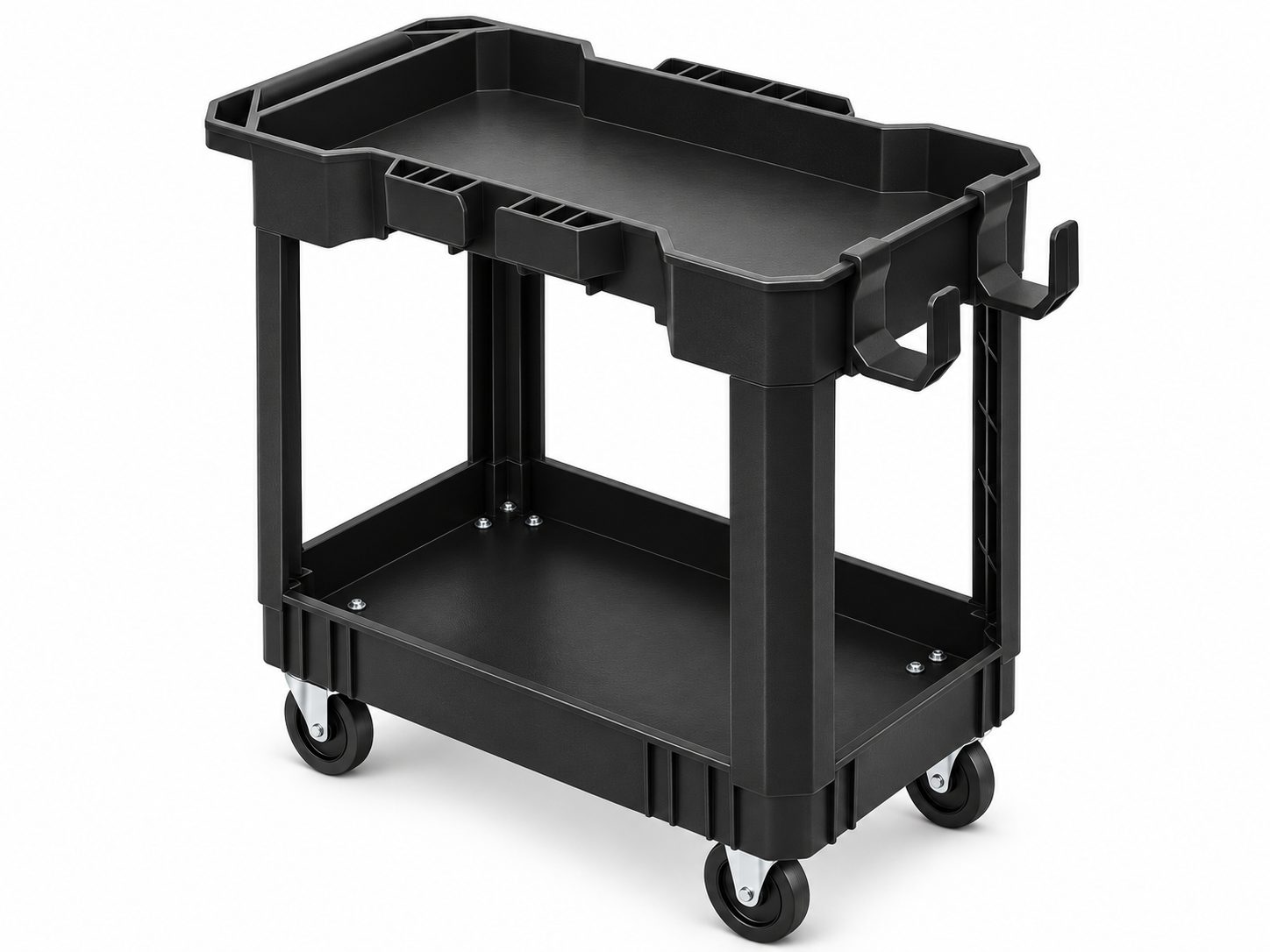
Material and weight influence durability, cleaning and how easily staff reposition the cart. The poly construction described for this model is intended for everyday garage, workshop and commercial use and is straightforward to clean. The cart's net weight is 32.19 lb, with a gross weight of 36 lb including packaging.
Shipping weight matters for freight planning and for anyone handling units at the destination. Confirm whether the cart arrives assembled or requires fitting, and factor assembly time into your resale or distribution plan.
Plan Around the Utility Cart Loading Qty
Container efficiency drives landed cost per unit. The stated 40'HQ loading quantity for this cart is 700 pcs, based on the packaging dimensions above. Use that figure when modelling freight and warehouse throughput, and verify it against your own container plan and any mixed-SKU loads.
Loading quantity is not a fixed promise for every order configuration. Packaging changes, accessories and mixed containers can alter the count, so treat the published figure as a planning baseline and confirm the final number with the supplier before booking freight.
Match the Utility Cart MOQ to Your Sales Channel
The utility cart MOQ for this model is 700 units, which aligns with the container loading figure. That volume suits importers, distributors and private-label sellers who can absorb a full container, but it may exceed the needs of small buyers or test orders.
Assess your sell-through rate before committing. If your channel cannot absorb a full container, ask whether mixed-model containers or staged shipments are possible, and confirm the answer in writing rather than assuming flexibility.
Compare Cart Options Before You Decide
Use a simple comparison across the options you are considering:
Light-duty versus heavy-duty rating: match the total weight capacity to the heaviest realistic load, not the average.
Single-tier versus two-tier: two shelves improve organization but add height and weight.
Caster configuration: all-swivel offers maximum maneuverability; mixed fixed and swivel favors tracking and control.
Wheel size: larger wheels roll over thresholds and uneven floors more easily.
Footprint: a compact cart fits tight aisles; a larger cart carries more but needs clearance.
Container efficiency: compare loading quantity per container to understand landed cost per unit.
Score each option against your customers' actual working conditions rather than against catalog claims alone.
Customization and OEM/ODM Options
Buyers with established brands often want more than a stock cart. Typical customization discussions cover cart color, label and packaging artwork, shelf configuration, caster specification, handle design and retail-ready carton printing. Raise these points early, because changes to packaging or components can affect both loading quantity and minimum order requirements.
Ask the supplier which elements are open to OEM or ODM work, what tooling or setup is involved, and how changes affect the confirmed order quantity. Keep every agreed change documented in the quotation and specification sheet.
What to Include in a Quotation Request
A complete request shortens the quoting cycle and reduces mismatches. Include the following:
Product name and model reference, such as the 32 in. Utility Cart
Required quantity and target shipment schedule
Destination port and preferred shipping terms
Any customization requirements for color, labeling or packaging
Required documentation and labeling standards for your market
Packaging preferences and whether retail-ready cartons are needed
Sample requirements and approval process
State your priorities clearly, for example whether cost per container or fastest availability matters more, so the supplier can propose the most suitable configuration.
Next Step: Contact the Supplier
With dimensions, load rating, caster setup, loading quantity and MOQ confirmed against your own requirements, you are ready to move forward. Contact the supplier with your completed quotation request to confirm specifications, customization scope and container planning for the 32 in. Utility Cart.
#UtilityCart #RollingUtilityCart #MaterialHandling #WarehouseEquipment #UtilityCartGuide #B2BSourcing