
How a Hitch Cargo Carrier Supports Extra Vehicle Storage

How a Hitch Cargo Carrier Supports Extra Vehicle Storage
When luggage, camping equipment or bulky supplies occupy too much interior space, a hitch cargo carrier creates an external loading area behind a compatible vehicle.
Its performance depends on more than basket size. The receiver connection, supporting frame, mesh platform and cargo restraints must work together as one system.
The Receiver Connection
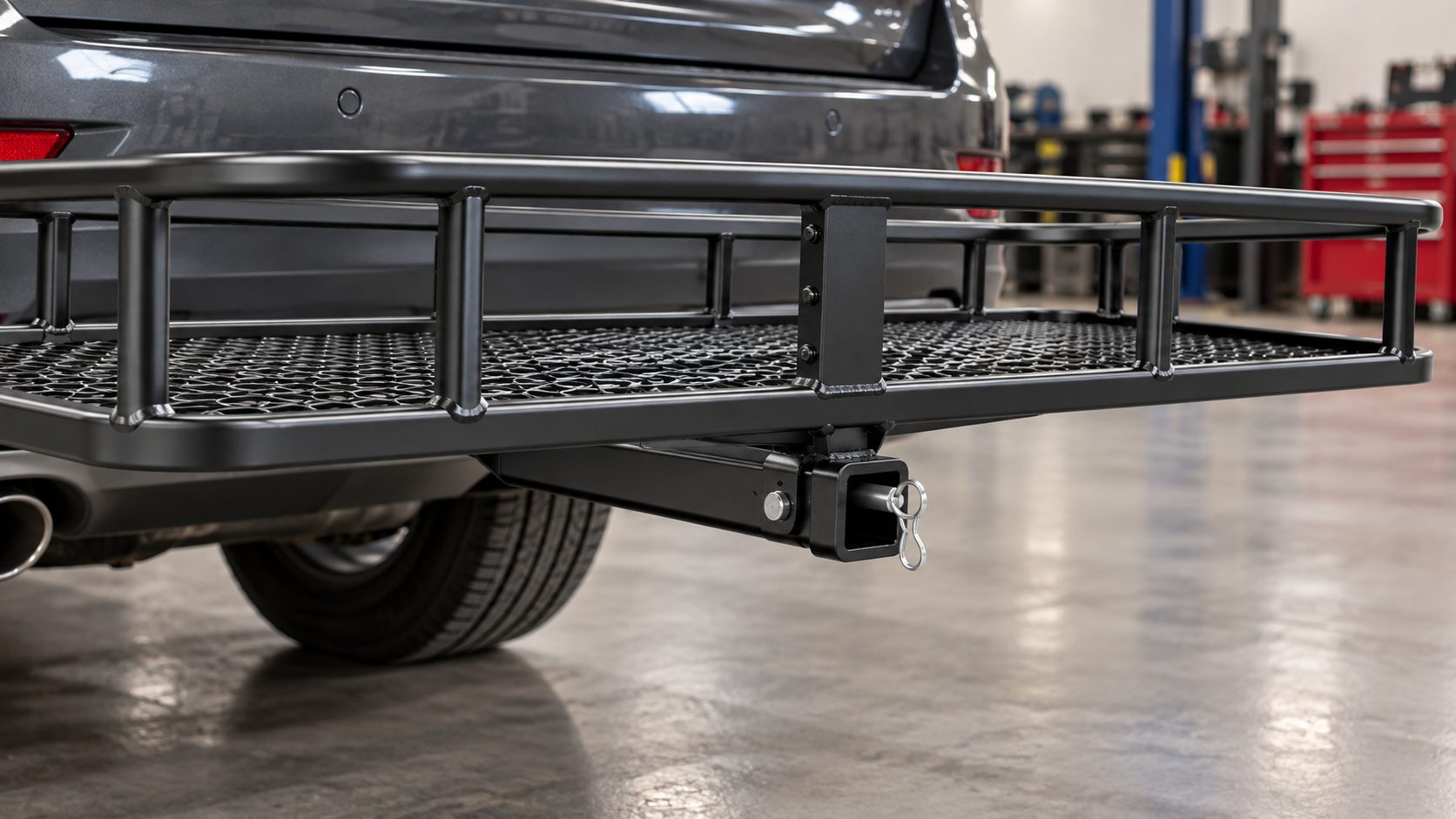
The square shank connects the carrier to a compatible vehicle receiver. This point transfers the weight of the carrier and cargo to the hitch system.
Before installation, users should confirm:
Receiver size and class
Hitch tongue-weight limit
Pin and clip compatibility
Clearance from the bumper
Ground clearance when loaded
Vehicle manufacturer requirements
The lowest verified limit among the vehicle, hitch, carrier and mounting hardware should never be exceeded.
The Supporting Frame
The basket is supported by a steel frame connected to the receiver shank. Cross members beneath the loading area help distribute cargo across the structure.
Buyers should evaluate frame material, tube thickness, weld quality and resistance to movement under the intended load.
Why Use a Mesh Platform?
The expanded-metal platform provides multiple contact points for boxes, bags and suitable outdoor equipment. Its open construction also allows water and loose debris to pass through.
Small objects should not be placed directly on the mesh unless they are contained inside suitable bags or boxes.
Raised Rails and Cargo Control
The surrounding rails help define the loading area and provide attachment points for straps.
They do not replace proper cargo restraints. Every item should be secured to reduce:
Sliding during acceleration
Movement while turning
Lifting over bumps
Contact with the road
Cargo falling from the carrier
Water-resistant bags or covers may be required because the load remains exposed to weather and road spray.
Load Placement Matters
Heavy items should be positioned low and close to the vehicle side of the platform. Weight should be distributed evenly across the carrier.
Before driving, check that the loaded carrier does not block:
Tail lights
License plate
Exhaust outlet
Rear sensors
Vehicle access points
Local road and visibility requirements should also be reviewed.
What Buyers Should Confirm
A professional sourcing specification should include:
Platform length and width
Receiver-shank dimensions
Steel grade and thickness
Mesh specification
Rail height
Weld and coating requirements
Target load capacity
Static and dynamic testing
Packaging configuration
Assembly instructions
These details should be confirmed through drawings and testing before final product claims are published.
OEM/ODM Hitch Cargo Carrier Manufacturing
TWS Industries supports customized cargo-carrier development for automotive brands, importers and vehicle-accessory distributors.
Customization options may include:
Basket dimensions
Steel tube specifications
Mesh pattern
Rail configuration
Receiver connection
Reflective elements
Surface finish and color
Custom logo and labels
Hardware packages
Retail and export packaging
Expand Cargo Space with the Right Structure
A well-designed hitch cargo carrier combines receiver compatibility, structural support and secure cargo placement in one external storage solution.
Contact TWS Industries for OEM/ODM development, sampling and customized bulk-order quotations.