
Adjustable Rolling Mechanic Stool – Design & Benefits

Adjustable Rolling Mechanic Stool – Small Design Details That Make Garage Work Easier
Sometimes, the smallest workshop equipment makes the biggest difference to your daily routine.
Imagine spending an afternoon working on your car. You are checking the brakes, removing a wheel, or reaching for tools near the lower body panels.
You sit down, stand up, search for another wrench, and move to the other side of the vehicle. These small movements may seem insignificant, but they can interrupt your workflow.
An adjustable rolling mechanic stool brings seating, mobility, and accessible tool storage into one compact workstation.
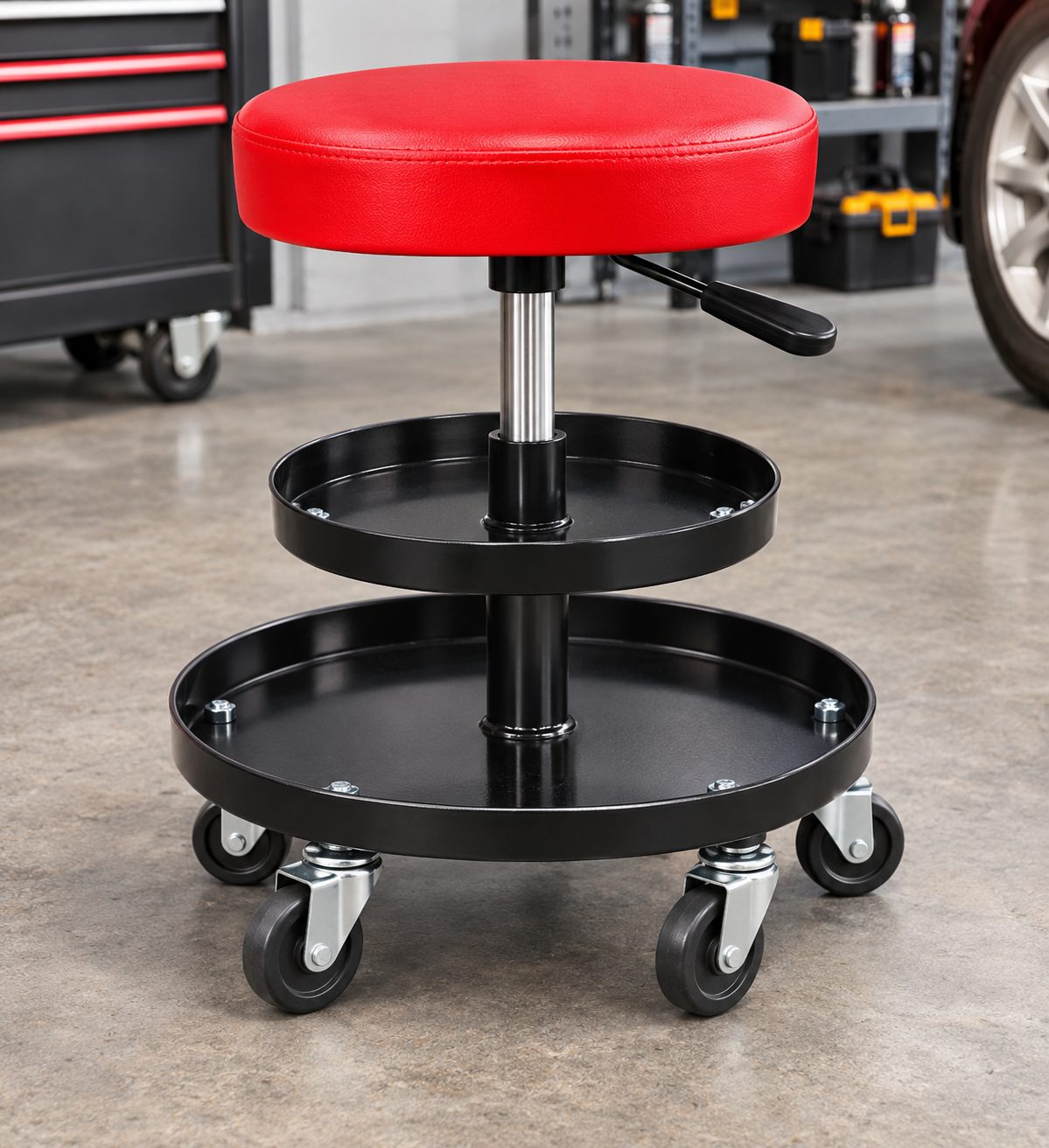
The featured design combines a red padded seat, height-adjustable center post, metal support structure, rolling caster wheels, and two circular storage trays.
Let's examine why these details matter and what buyers should consider when choosing a garage stool.
01 | Why a Rolling Mechanic Stool Belongs in a Working Garage
The Problem with Constantly Changing Positions
Automotive maintenance involves more than standing beside a workbench.
Many tasks require working close to the ground, particularly around wheels, lower body panels, and accessible underbody areas.
A conventional chair is rarely designed for this environment.
It may be too tall, difficult to move, or unsuitable for keeping frequently used tools nearby.
A rolling mechanic stool offers a more task-oriented seating arrangement.
Where It Can Be Useful
Wheel and tire maintenance
Brake inspections and servicing
Vehicle cleaning and detailing
Lower body panel work
Motorcycle maintenance
Workshop assembly tasks
The stool provides a seated working position, but it must be used on a suitable floor and within its approved operating limits.
02 | Adjustable Height – A Practical Feature for Different Tasks
Why Working Height Matters
One feature worth examining is the adjustable center post.
Not every repair requires the same sitting height.
When working near a vehicle wheel, a lower seated position may be useful. During other maintenance activities, a different position can provide more convenient access.
The ability to adjust the seat allows users to position themselves according to the work being performed.
What Should Buyers Check?
Before purchasing, review the following specifications:
Minimum seat height
Maximum seat height
Adjustment mechanism
Locking or securing arrangement
Rated weight capacity
Seat stability
The exact height adjustment range of the featured product has not been confirmed and should be verified against its technical drawing.
Design Insight: Adjustable seating is most useful when it provides stable support at every approved working position.
03 | Two-Tier Tool Storage – More Than Extra Space
Keep Frequently Used Tools Within Reach
One of the most distinctive aspects of this mechanic stool is its circular tool storage system.
The design includes two trays beneath the seat.
Instead of placing tools on the floor or repeatedly walking to a tool cabinet, mechanics can keep selected accessories close to the work area.
Upper Tray – Quick Access
The upper storage tray can accommodate compatible small tools, fasteners, and maintenance accessories.
This makes it useful for items needed frequently during a task.
Lower Tray – Additional Storage
The larger lower tray provides another area for suitable equipment and supplies.
Items should be arranged securely within the tray's approved capacity.
Why Storage Layout Matters
Effective tool organization can help users:
Reduce unnecessary movement
Separate small accessories
Maintain a more organized work area
Keep selected tools accessible
Make better use of limited garage space
Practical Value: The stool is not simply a seat with wheels. Its design creates a compact, movable storage station.
04 | Caster Wheels – Understanding Mobility and Control
Moving Around the Vehicle Without Carrying the Stool
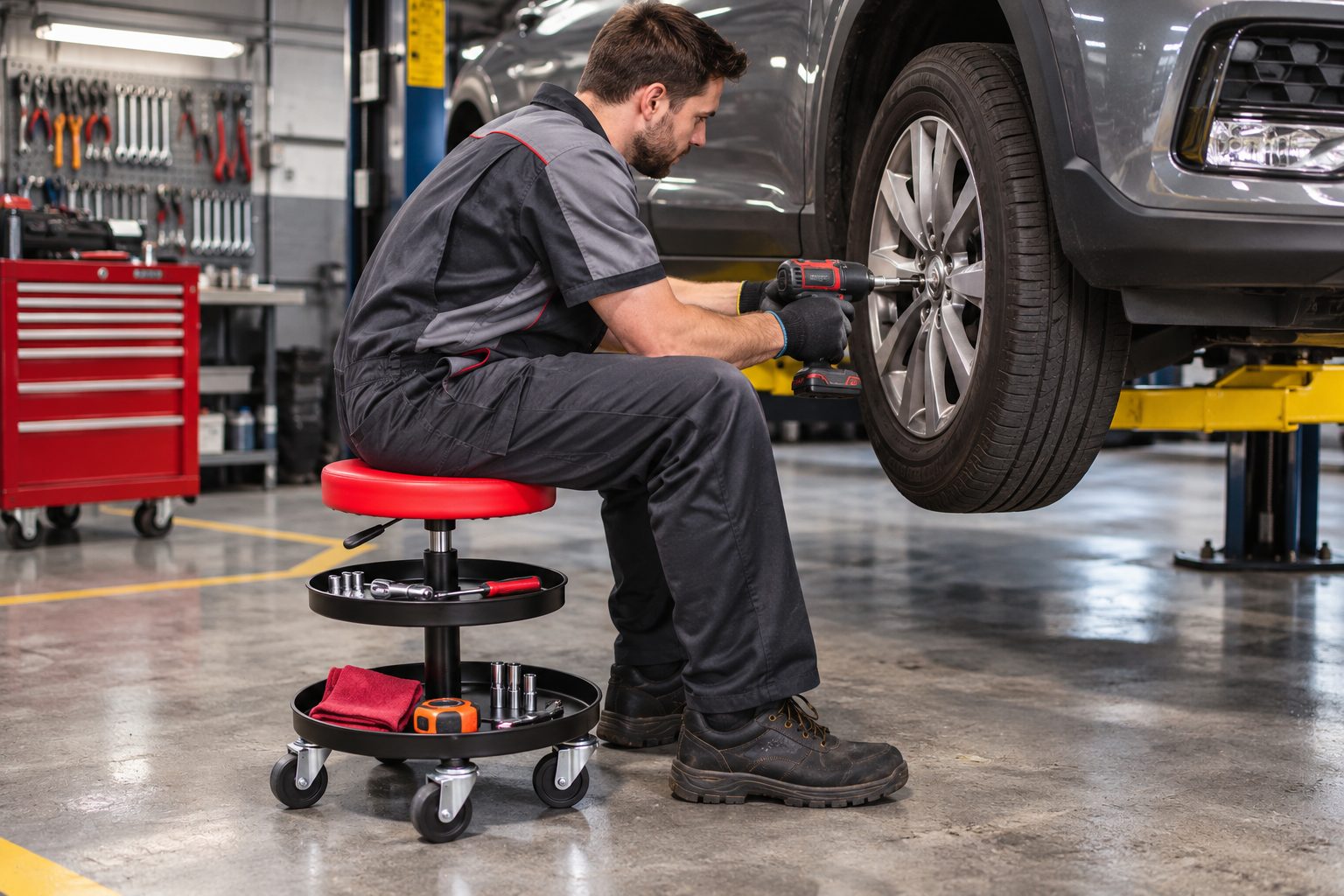
The product features small caster wheels mounted beneath its circular base.
These allow the stool to be repositioned along a suitable workshop floor.
This can be convenient when moving between different areas of a vehicle.
However, rolling performance depends on the wheel material, caster construction, floor surface, and operating load.
Important Wheel Considerations
Wheel Diameter
Affects movement over small floor irregularities and obstacles.
Caster Material
Influences floor compatibility, rolling resistance, and wear.
Bearing Quality
Can affect smoothness of movement over time.
Mounting Strength
Determines how securely the caster assemblies connect to the supporting structure.
A Common Buying Mistake
Do not assume that all rolling stools perform equally on every surface.
Casters intended for smooth concrete may behave differently on uneven floors or surfaces containing debris.
Buyer Tip: Review wheel specifications and stability requirements before approving a product for workshop use.
05 | Padded Seat Design – Balancing Comfort and Durability
Small Details That Affect Everyday Use
The featured mechanic stool includes a bright red circular padded seat.
Its contrasting color creates a distinctive appearance against the black metal structure.
For professional applications, the important questions go beyond visual design.
Buyers should assess:
Seat diameter
Padding thickness
Cushion density
Upholstery material
Surface cleaning requirements
Resistance to normal workshop wear
Why Cleaning Matters
Automotive work environments may expose seating surfaces to dust, dirt, grease, and other workshop contaminants.
A practical stool should have materials suitable for the cleaning methods specified by the manufacturer.
Material compatibility should be verified rather than assuming every seat covering is resistant to oils or chemicals.
06 | Rolling Mechanic Stool vs Traditional Workshop Chair
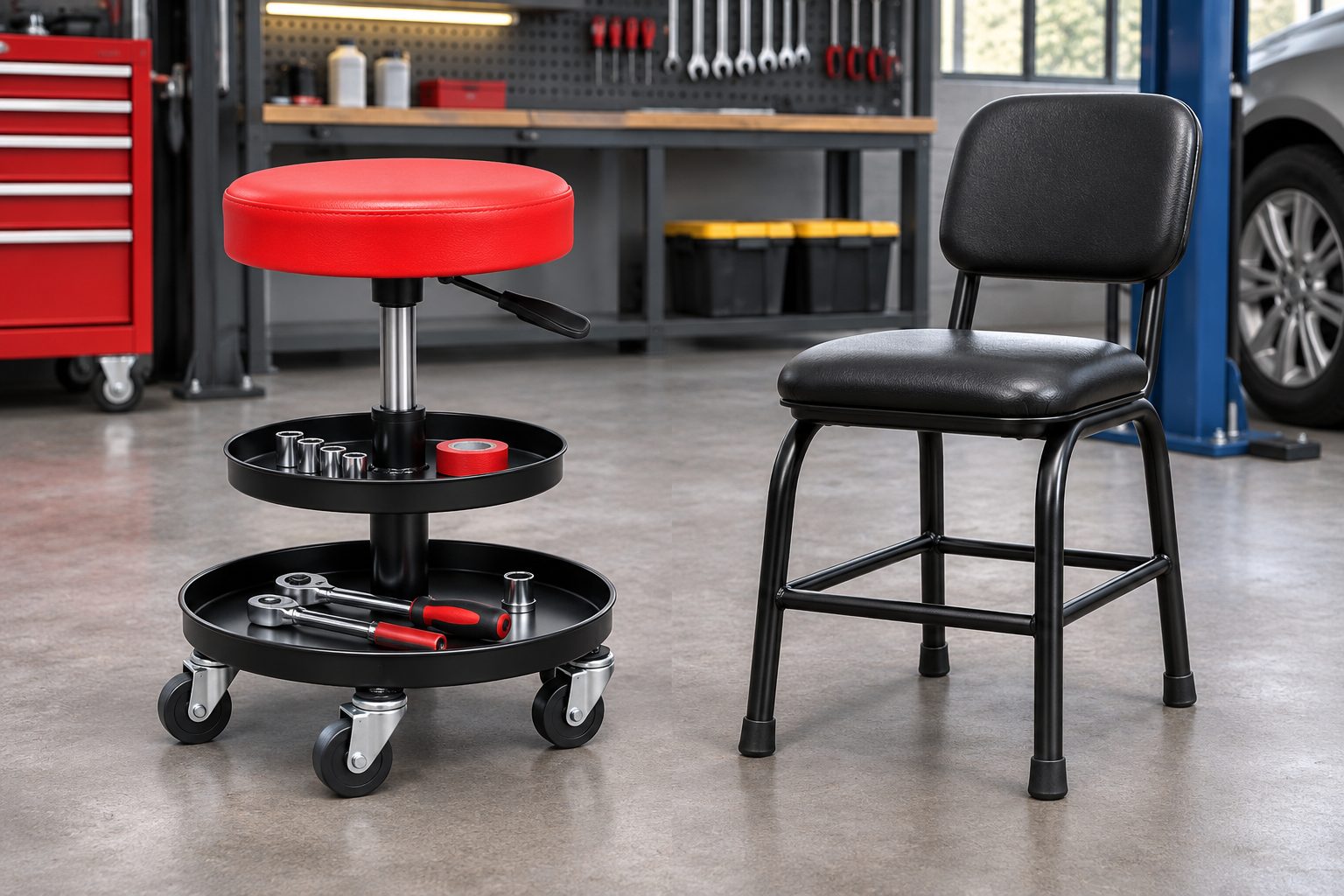
Which One Is Better for Garage Maintenance?
Both products provide seating, but their intended applications can differ.
Feature | Rolling Mechanic Stool | Traditional Workshop Chair |
|---|---|---|
Working Position | Low-level service tasks | General seated work |
Mobility | Caster-equipped base | Depends on model |
Tool Storage | Two integrated trays on featured model | Often separate |
Seat Height | Adjustable on featured model | Depends on chair |
Footprint | Compact rolling structure | Varies by design |
Typical Application | Automotive maintenance | General workshop tasks |
When Should You Choose a Rolling Stool?
A rolling mechanic stool may be useful when work involves frequent repositioning close to the vehicle.
A traditional workshop chair may be preferable for tasks performed at a fixed bench or higher working surface.
The right choice depends on the work area, seat height, load requirements, and floor conditions.
07 | What Makes a Mechanic Stool Suitable for Importers?
Product Quality Should Be Evaluated Before Bulk Orders
For importers and garage equipment distributors, an attractive design is only the beginning.
Long-term commercial value depends on consistent specifications, quality control, packaging, and suitability for the intended market.
Important Inspection Points
Structural Stability
Evaluate the metal frame and base according to approved load and stability requirements.
Seat Adjustment
Confirm the adjustment mechanism operates correctly across its intended range.
Caster Performance
Check wheel rotation, mounting, and durability under appropriate operating conditions.
Tray Construction
Review the metal trays, joints, surface finish, and approved storage loads.
Seat Quality
Inspect upholstery consistency, padding, assembly, and cleaning requirements.
Packaging Protection
Confirm how the product is packed and whether applicable transport tests are required.
A reliable sampling process helps buyers identify issues before commercial production.
08 | OEM/ODM Rolling Mechanic Stool Manufacturing in Vietnam
Develop Garage Equipment for Your Brand
Mechanic stools can form part of a coordinated collection of automotive maintenance and workshop equipment.
At TWS Industries, we welcome OEM/ODM inquiries for metal garage equipment and related product development.
Potential Customization Options
Metal base dimensions
Seat dimensions and colors
Padding and upholstery specifications
Height adjustment configurations
Caster types
Storage tray arrangements
Surface finishes
Brand labels
Retail packaging
All customization options are subject to engineering review and production feasibility.
What Should Buyers Include in an RFQ?
To receive a technically accurate quotation, buyers should provide:
Product drawings
Required weight capacity
Seat height adjustment range
Material specifications
Wheel requirements
Packaging specifications
Required tests or standards
Estimated annual volume
Target price and destination market
Clear project requirements help reduce misunderstandings between buyers and manufacturing teams.
Frequently Asked Questions
What Is an Adjustable Rolling Mechanic Stool Used For?
It provides a movable seated working position for suitable automotive maintenance, workshop servicing, and other low-level tasks.
Does This Mechanic Stool Have Tool Storage?
Yes. The featured design includes two circular storage trays beneath the seat.
Can the Seat Height Be Adjusted?
The supplied product images indicate an adjustable center post. The exact height range and mechanism require technical confirmation.
Is the Stool Suitable for Professional Automotive Workshops?
It may be suitable when its verified capacity, stability, dimensions, wheels, and other specifications match the intended use.
Can Rolling Mechanic Stools Be Customized for OEM Brands?
Potential customization includes seat materials, colors, frame dimensions, caster selection, storage trays, and packaging, subject to manufacturing feasibility.
Final Thoughts – Better Organization Starts with Practical Equipment
Good workshop equipment should make everyday tasks more manageable.
An adjustable rolling mechanic stool brings together three useful functions: a seated working position, a movable base, and accessible tool storage.
The featured design combines these elements in a compact garage accessory with a red padded seat, adjustable structure, and two-tier metal trays.
For importers and distributors, it represents a product concept worth evaluating as part of a broader automotive workshop equipment range.
Work at the Right Height. Keep Tools Within Reach. Move with Your Task.
Looking for an OEM/ODM Mechanic Stool Manufacturer in Vietnam?
TWS Industries welcomes inquiries from international importers, wholesalers, distributors, retailers, and private-label garage equipment brands.
Send your technical drawings, required load capacity, material specifications, adjustment range, wheel requirements, packaging details, and estimated annual volume.
TWS INDUSTRIES | OEM/ODM Metal Products Manufacturer in Vietnam
Email: vivian.dang@tws-industries.com
Phone / WhatsApp: +84 889 399 339
Request Your OEM/ODM Quotation Today.