
5 Hitch Cargo Carrier Myths Buyers Should Avoid

5 Hitch Cargo Carrier Myths Buyers Should Avoid
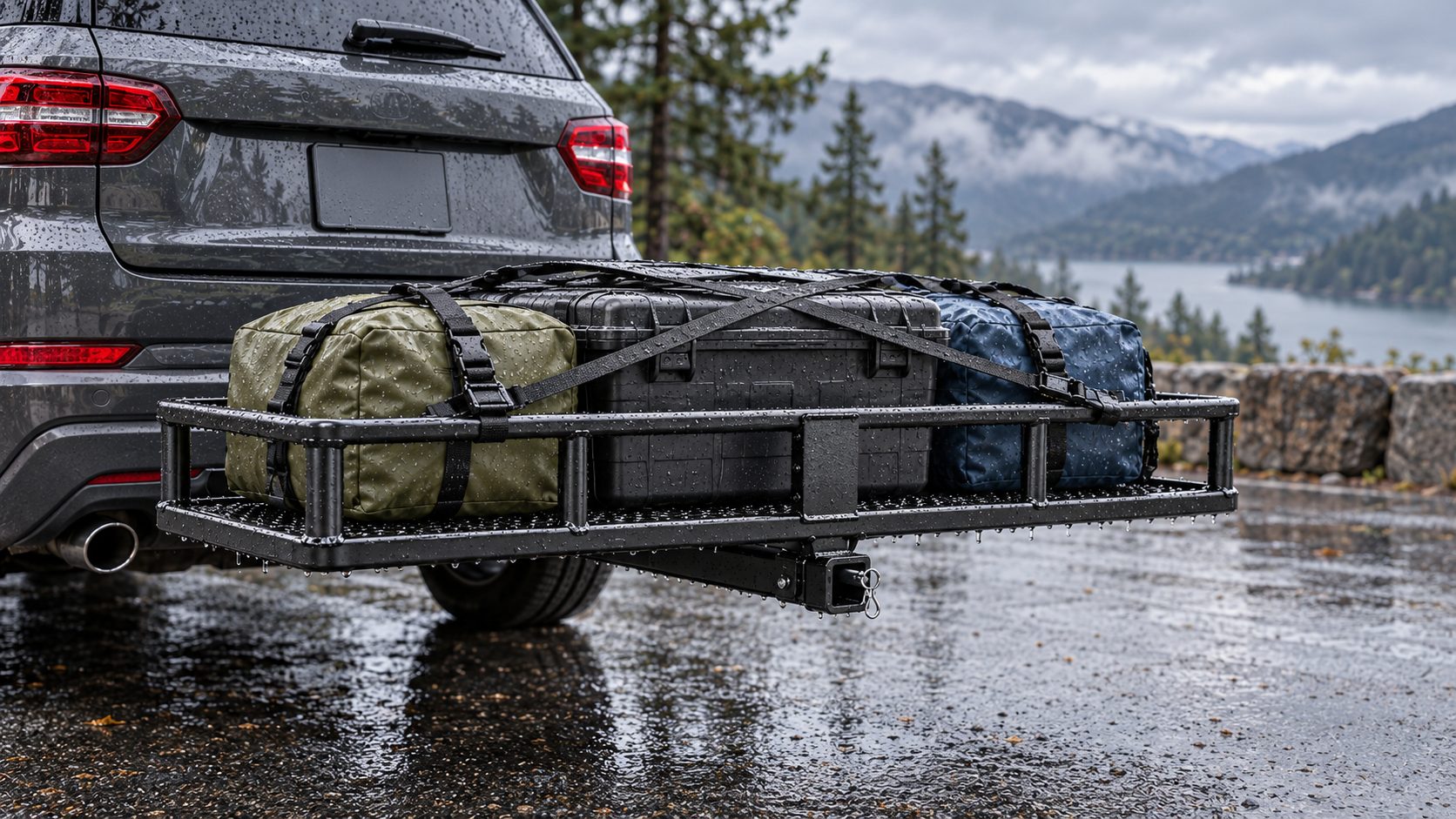
A hitch cargo carrier can create valuable storage space behind an SUV, pickup or compatible vehicle. However, choosing one by basket size alone can lead to poor compatibility, unstable cargo or incorrect product claims.
Here are five common assumptions buyers should examine before purchasing or developing this product.
Myth 1: If the Basket Has Space, It Can Carry More
Available space does not determine safe capacity.
The complete limit depends on the vehicle, receiver hitch, carrier, mounting hardware and cargo position. The lowest confirmed rating within this system becomes the applicable limit.
Buyers should verify:
Carrier weight
Cargo weight
Vehicle tongue-weight limit
Hitch classification
Receiver compatibility
Load-testing method
A large basket should never be treated as proof of high load capacity.
Myth 2: Raised Rails Keep Cargo Secure
The surrounding rails help define the loading area and provide useful strap attachment points. They do not prevent every box or bag from moving.
Cargo can shift during braking, turning or travel over uneven roads. Suitable straps should secure each load to structural points on the basket.
The restraint system should match the cargo shape, weight and intended journey.
Myth 3: Every Receiver Connection Is the Same
Receiver tubes, hitch classes, pin locations and vehicle clearances can differ.
Before ordering, buyers should confirm:
Receiver opening dimensions
Shank dimensions
Hitch-pin diameter and position
Distance from the bumper
Exhaust clearance
Loaded ground clearance
Compatibility should be based on drawings and vehicle requirements rather than appearance.
Myth 4: A Mesh Platform Protects the Load
An expanded-metal floor provides support while allowing water and loose debris to pass through. It does not protect luggage from rain, dust or road spray.
Sensitive items may require:
Closed storage boxes
Water-resistant cargo bags
Protective covers
Internal packaging
Additional tie-down straps
Small objects should not be placed directly on the mesh where they may fall through.
Myth 5: Installation Is Complete Once the Pin Is Inserted
The hitch pin and retaining clip are essential, but the complete installation should also be inspected for excessive movement, incorrect alignment and insufficient clearance.
Before driving, users should confirm that:
The pin is fully engaged
The retaining clip is installed
The carrier sits correctly
The cargo is evenly distributed
Straps are tightened
Lights and license plate remain visible
The load remains clear of the exhaust outlet
The carrier and restraints should be checked again during long journeys.
What Makes a Better Hitch Cargo Carrier?
A suitable product balances:
Receiver compatibility
Structural rigidity
Practical basket dimensions
Secure tie-down positions
Ground and bumper clearance
Surface-finish requirements
Packaging efficiency
Clear installation instructions
Final claims should be supported by technical drawings and appropriate static and dynamic testing.
OEM/ODM Manufacturing for B2B Buyers
TWS Industries supports customized hitch cargo carrier development for automotive brands, importers and vehicle-accessory distributors.
Customization options may include:
Basket length and width
Steel tube specifications
Mesh-floor design
Perimeter rail height
Receiver-shank configuration
Hitch-pin package
Reflective elements
Surface finish and color
Custom branding
Retail and export packaging
Make the Decision from the Complete System
A hitch cargo carrier should be selected as part of the vehicle’s complete load-carrying system—not as an independent basket.
Contact TWS Industries for OEM/ODM development, sample preparation and customized bulk-order quotations.