
3 Tier Welding Cart: What Buyers Should Know Before Ordering

A 3 tier welding cart is a mobile workshop unit built to hold welding machines, gas cylinders, tools and consumables across three shelf levels, keeping a workstation organised and easy to move. For importers, the key facts are the physical dimensions, the packed volume and the unit weight, because these determine container loading, handling and resale positioning. This overview covers the product's construction logic, its tier welding CBM and weight data, its technical parameters, and the industrial settings where it performs best, so overseas buyers can evaluate a shipment before requesting a quotation.
What a 3 tier welding cart is designed to do
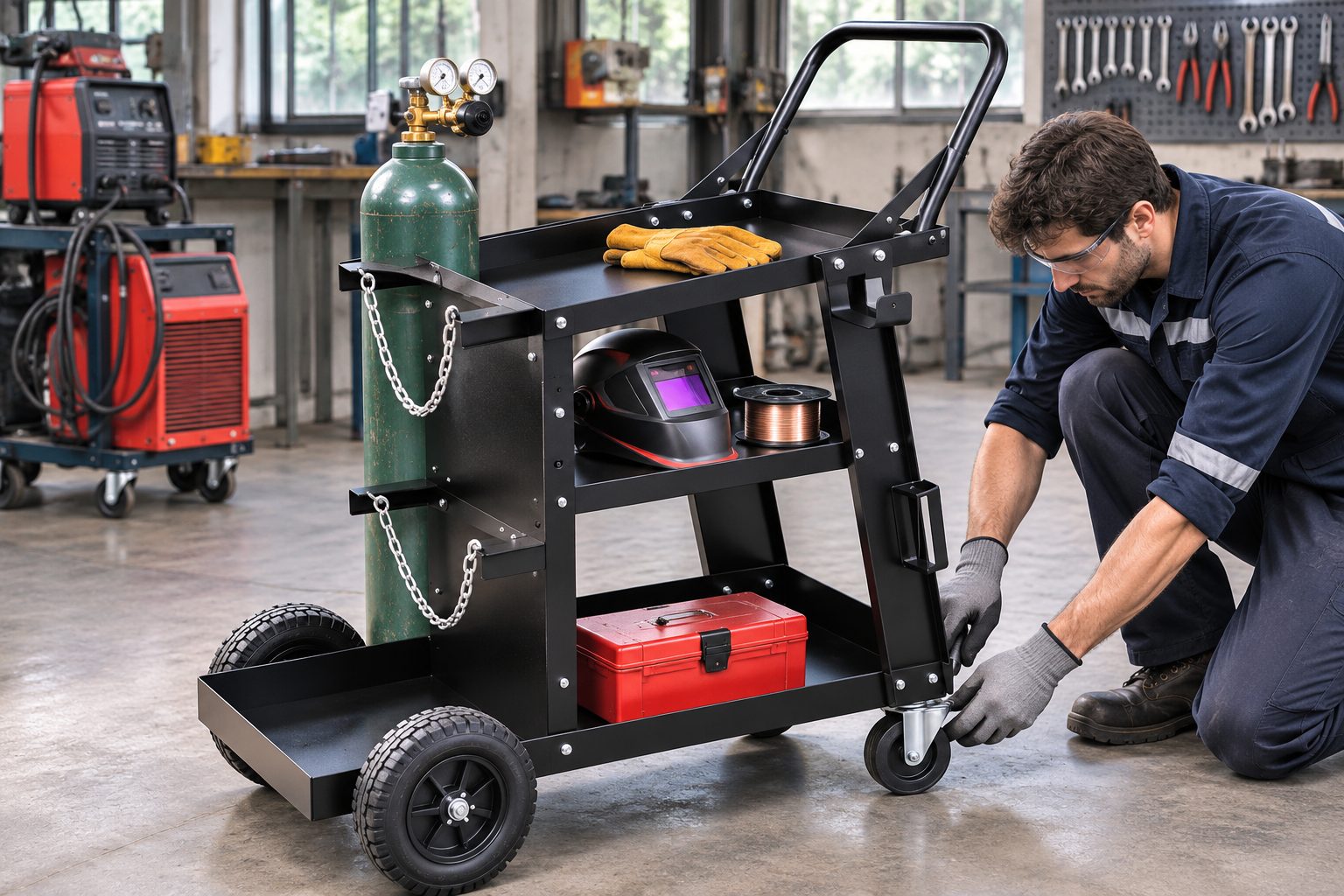
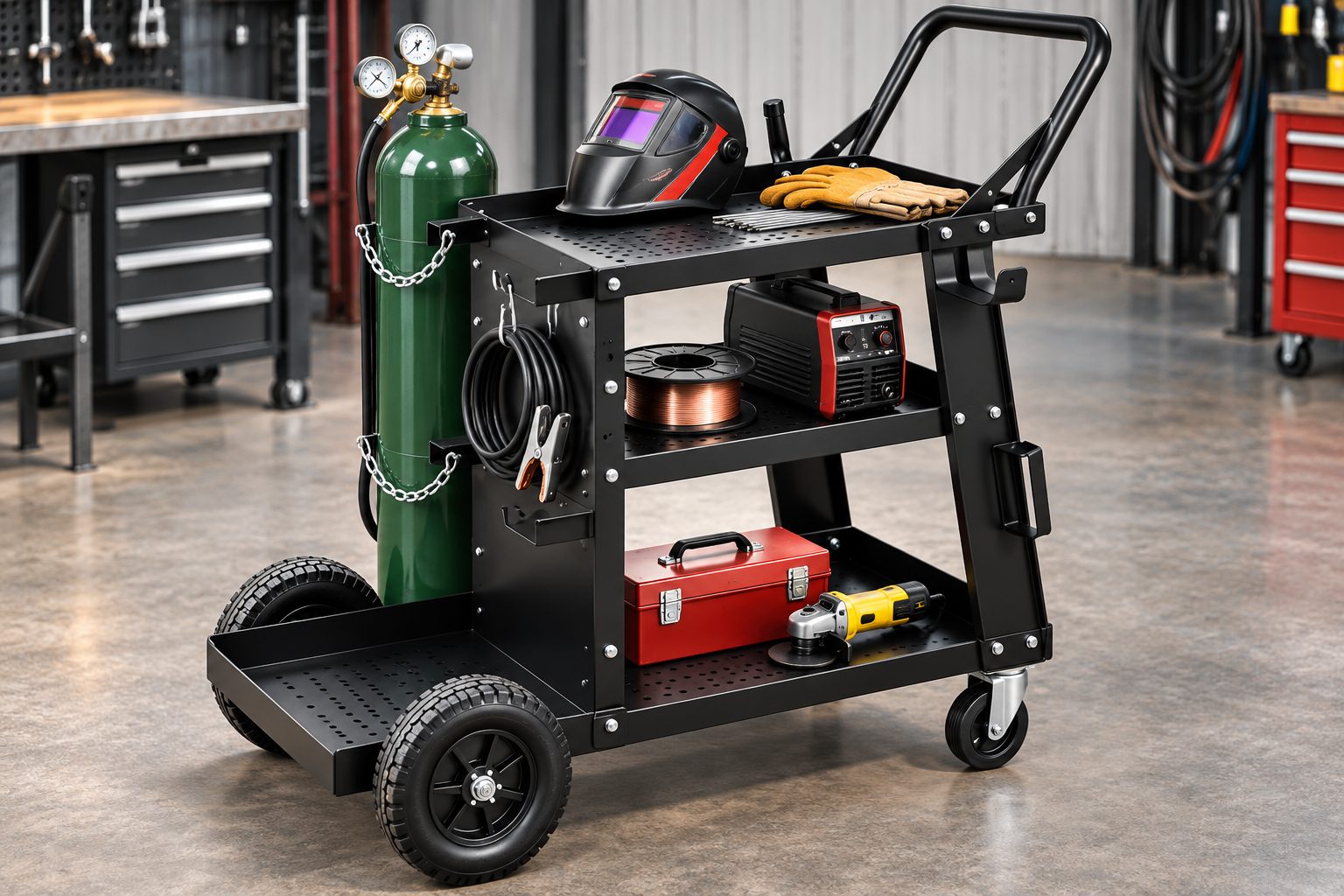
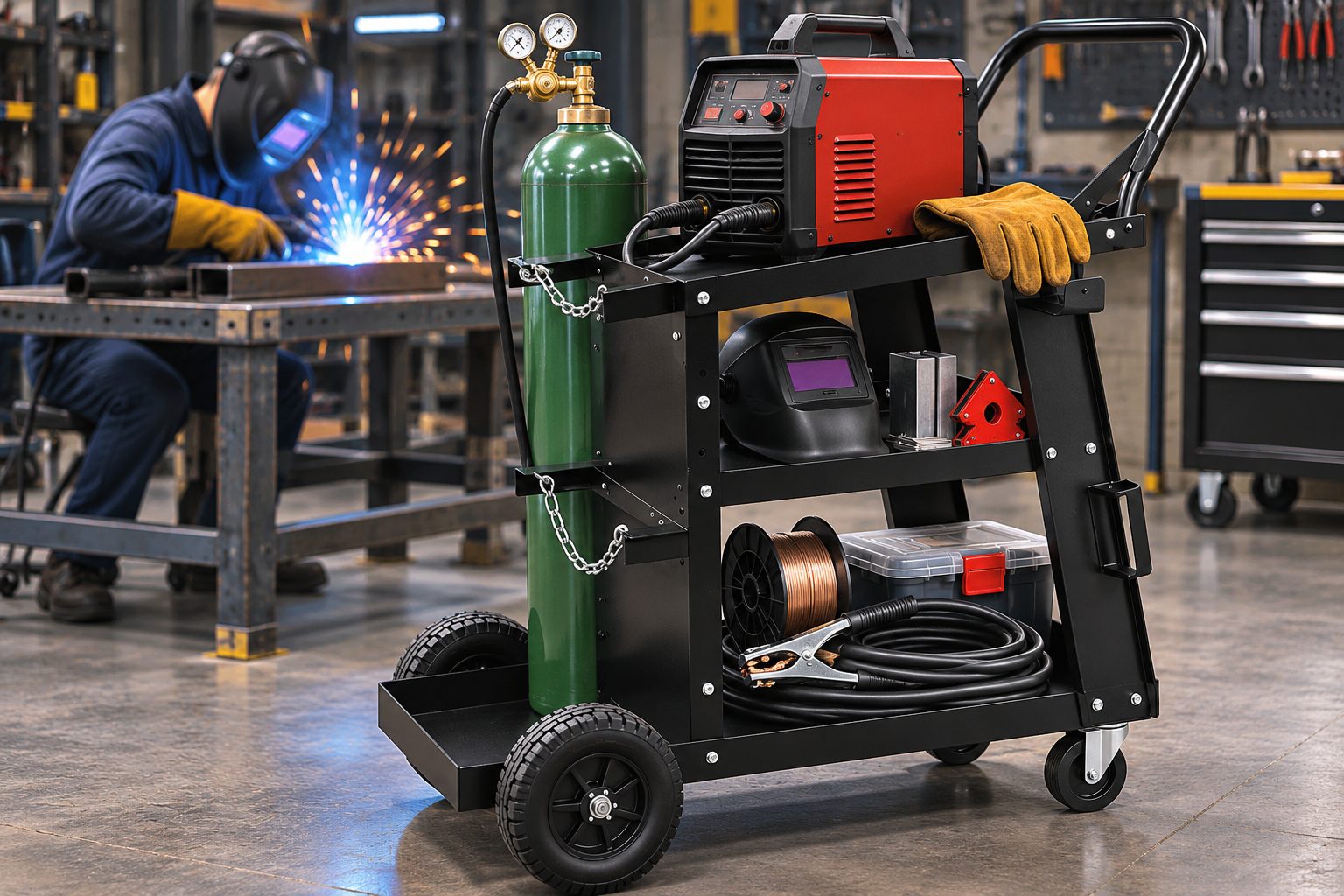
The three-tier layout separates the load by function. The top level typically carries the welding machine within easy reach, the middle level holds tools, helmets and consumables, and the lower level adds stability while storing heavier items close to the ground. Castors make the unit mobile across workshop floors, and a handle allows the operator to steer it between workstations.
For buyers, the practical value is organisation and mobility in one frame. Instead of fixed benches and scattered equipment, one cart consolidates the welding setup, which suits fabrication shops that reconfigure work areas frequently.
Tier welding CBM and packed dimensions for shipping
Shipping volume is one of the first things a buyer checks, and this model is straightforward to plan around. The packed carton measures 72.9 cm long, 33.02 cm wide and 8.89 cm high, giving a total volume of 0.18 CBM per unit. That flat, compact carton shape is useful when calculating container loads, because cartons can be stacked and counted predictably.
Packed volume: 0.18 CBM per carton
Package length: 72.9 cm
Package width: 33.02 cm
Package height: 8.89 cm
Package weight: 11.29 kg
Buyers should confirm carton counts per pallet and per container with the supplier, since stacking method and pallet height affect the final figure.
Tier welding specifications and product dimensions
The assembled product measures 71.12 cm long, 38.1 cm wide and 68.07 cm high, and the stated size of 278 x 15 x 26.8 inch in the product name should be read against the metric dimensions during quotation. The net product weight is 10.3 kg, while the packed weight is 11.29 kg, so packaging adds roughly one kilogram per unit.
That weight profile matters for two reasons. First, a single worker can generally handle the carton in a warehouse. Second, the assembled cart is light enough to move loaded across a shop floor without excessive effort, while the steel frame provides the rigidity the tiers require.
Tier welding technical parameters to verify
Technical parameters should be confirmed in writing before an order is placed, because catalogue listings and specification sheets sometimes differ. The parameters worth checking include load capacity per shelf, castor type and diameter, wheel braking, frame material and finish, and the assembly method used for the tiers.
Load rating per tier and total load rating
Castor configuration, including swivel and brake options
Frame material, thickness and surface finish
Assembly hardware and whether tools are included
Carton marking and labelling requirements for your market
Where a parameter is not published, request it directly rather than assuming a value.
Tier welding industrial applications across workshops
These carts suit a broad range of welding environments. Fabrication and metalworking shops use them to keep a welder, helmet and consumables together. Maintenance departments in factories and plants move them to breakdown sites. Automotive repair workshops, construction sites with temporary welding stations, and training workshops in technical schools also fit the profile.
Because the cart is compact and mobile, it works well wherever welding happens in more than one location, and where floor space is limited but a stable, organised station is still required.
Comparing tier configurations and cart options
Buyers typically choose between two-tier, three-tier and drawer-equipped carts. A two-tier cart is lighter and cheaper to ship but offers less separation between machine and tools. A three-tier cart, like this model, balances storage, stability and shipping volume. Drawer-style carts add enclosed storage but increase weight and packed CBM.
The right choice depends on the buyer's market: entry-level workshop buyers often prefer simple three-tier units, while professional distributors may want drawer variants and branded packaging.
Customization and OEM options for importers
OEM and ODM programmes commonly cover powder-coat colour, logo placement on the frame or shelf, carton printing, and instruction manual language. Some suppliers also adjust shelf configuration or castor specification for a target market. Buyers should confirm which changes affect the packed dimensions and weight, since those changes flow through to CBM and freight cost.
What to include in a quotation request
A clear request shortens the sourcing cycle. Include the model reference, required quantity, target market, preferred finish or colour, packaging and labelling requirements, and any documentation you need. State whether you require samples before mass production, and ask the supplier to confirm the packed CBM and weight per carton so freight can be calculated accurately.
Next step: contact the supplier
Once your specification is clear, contact the supplier directly with your requirements and ask for a formal quotation covering the cart, packaging and documentation. Confirming the tier welding specifications in writing before ordering protects both sides and keeps your landed-cost calculation reliable.
#WeldingCart #WorkshopEquipment #MaterialHandling #IndustrialStorage #OEMWeldingCart